

Air conditioning problems rarely announce themselves at a convenient time, and in Decatur, GA, where summer heat and humidity arrive early and stay late, a system that is not performing correctly can make a home genuinely uncomfortable within hours. From the older homes near Sycamore Drive to the neighborhoods surrounding Second Avenue, the same handful of AC issues recur in our service calls, and most follow recognizable patterns that point to clear solutions. Our AC repair services cover everything outlined below, and understanding these problems helps homeowners know what they are dealing with before a technician arrives.
Insufficient Cooling
When an AC system is running but not keeping the home comfortable, the cause is rarely random. Insufficient cooling is one of the most common complaints we hear from Decatur homeowners during peak summer months, and it typically comes down to one of a few well-established issues.
Common causes of inadequate cooling include:
- Dirty or clogged air filter: A filter that has not been changed on schedule restricts airflow across the evaporator coil, reducing the system’s ability to absorb heat from the indoor air. This is one of the most preventable causes of poor cooling performance.
- Low refrigerant levels: When the refrigerant charge drops due to a leak, the system loses its ability to transfer heat effectively. Low refrigerant is not a consumable that depletes with normal use; it always indicates a leak that needs to be located and repaired.
- Blocked or dirty condenser coils: The outdoor condenser unit rejects heat absorbed from the home. When the coils are covered in dirt or debris, the heat-rejection process is impaired, and the system cannot cool effectively, regardless of how long it runs.
- Thermostat issues: A thermostat that is misreading room temperature or not calibrated correctly can prevent the system from running long enough to reach the set point
Each of these causes has a distinct solution. Our AC maintenance visits address all of them as part of a comprehensive system check, catching these conditions before they result in a comfort complaint or a service call.
AC Unit Not Turning On
A system that will not start at all is a different problem category from one that runs poorly. When there is no response from the unit, the issue is almost always on the power or control side of the system rather than in the refrigeration or airflow components.
Common reasons an AC unit fails to start include:
- Tripped circuit breaker: A tripped breaker at the electrical panel cuts power to the system entirely. This can happen after a power surge, an electrical fault in the equipment, or a breaker that has weakened over time.
- Thermostat misconfiguration: The system mode may be set to heat or off, the set temperature may be above the current room temperature, or low batteries may be interrupting the control signal to the unit
- Blown control board fuse: Many AC systems have an internal fuse on the control board that protects the low-voltage circuit. A blown fuse prevents the system from responding to thermostat signals, even when line power is present.
- Damaged wiring: Loose or corroded connections at the disconnect, contactor, or control board can interrupt the circuit without tripping a breaker
Visible burn marks or damaged wiring near any electrical component are signs that the system should not be restarted until a technician has evaluated it. These are not situations for trial and error.
Strange Noises From the AC
Unusual sounds coming from an AC system are worth taking seriously because they are almost always an early indicator of a developing mechanical problem. The longer a noise goes unaddressed, the more likely it is to progress from a minor issue to a more costly one.
Common AC noises and what they typically indicate:
- High-pitched whistling or hissing: Often points to a refrigerant leak or, in some cases, airflow restriction through a partially closed duct or register
- Banging or clanking: Frequently caused by a loose or failing component inside the air handler or outdoor unit, such as a fan blade, motor mount, or compressor part.
- Rattling: Usually indicates loose panels, screws, or small debris that has entered the unit near the fan or blower assembly.
- Constant humming: Can suggest an electrical issue, a failing capacitor, or a compressor that is struggling to start
None of these sounds resolves on its own. Our thermostat repair and installation, along with our broader diagnostic services, help accurately identify the source so the right repair is performed the first time.
Refrigerant Leaks
A refrigerant leak is one of the more consequential AC problems a homeowner can face, both because of its direct effect on system performance and because of the potential for compressor damage if the system continues to operate with a low charge.
Signs that a refrigerant leak may be present include:
- The system is running, but the cooling output has dropped noticeably
- Ice is forming on the evaporator coil or refrigerant lines
- A hissing or bubbling sound is audible near the air handler or outdoor unit
- Energy bills have increased without a corresponding change in usage
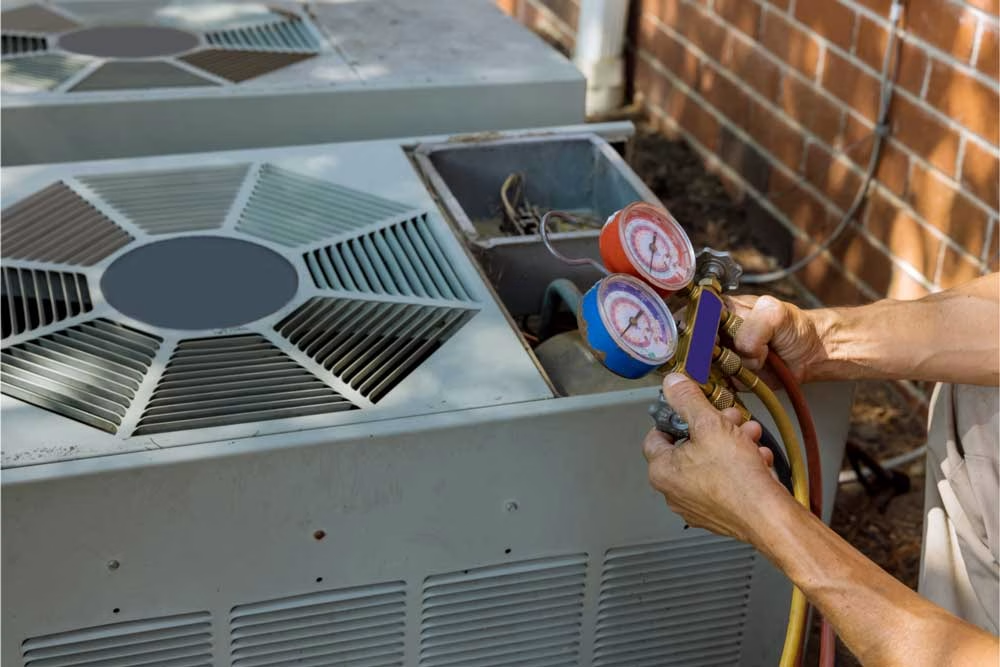
Refrigerant handling requires EPA certification, and the repair process involves locating the leak, making the repair, and verifying the fix before recharging the system to the correct specification. Recharging without repairing the leak is a temporary measure that does not address the underlying problem and will cause the same issue to recur.
Regular professional maintenance, including refrigerant level verification, is the most effective way to catch developing leaks before they cause comfort problems or equipment damage.
Frequent Cycling
Short cycling, where the system turns on and off in rapid succession without completing a full cooling cycle, is a symptom that puts extra stress on the compressor and prevents the system from adequately controlling humidity. It is also a reliable signal that something in the system is not operating correctly.
Common causes of frequent cycling include:
Oversized equipment: A unit that is too large for the space cools the air quickly but shuts off before it can run long enough to remove humidity, leaving the home feeling clammy even after reaching the set temperature. This is a sizing issue that cannot be resolved solely through maintenance.
Dirty air filter: Restricted airflow causes the system to reach its high-limit thresholds too quickly, shutting down before completing a normal cycle. Our AC and furnace air filter replacement service is one of the most straightforward ways to eliminate this as a contributing factor.
Thermostat placement or calibration issues: A thermostat located near a heat source, in direct sunlight, or near a supply vent will read inaccurate temperatures and cycle the system erratically
Low refrigerant: As with insufficient cooling, a low charge affects the pressure balance in the system and can trigger safety controls that cause premature shutdowns
Keeping Your Decatur Home Cool All Summer
Most AC problems follow recognizable patterns, and they are far easier and less expensive to address when caught early. If your system is showing any of the symptoms covered in this guide, contact us today so we can get to the root of the issue before it becomes a bigger problem.