
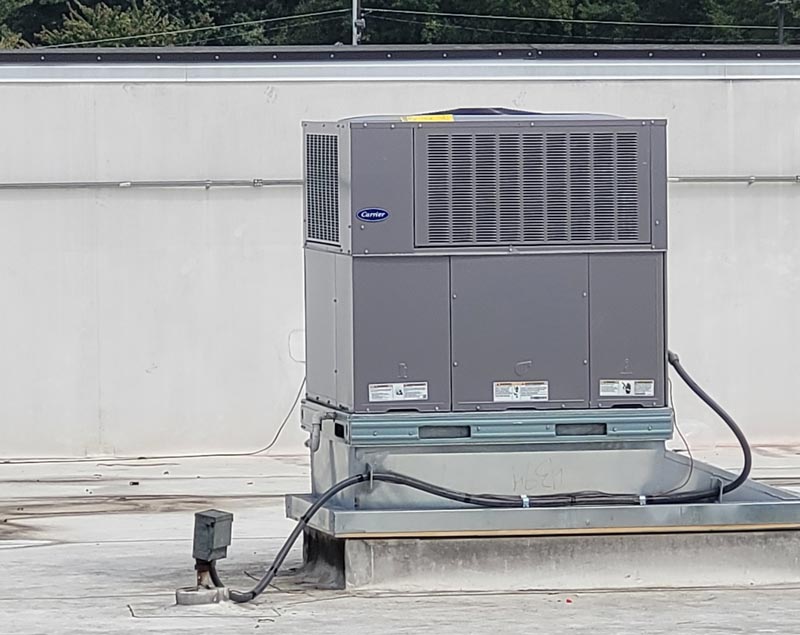
A commercial HVAC system failure does not just create a comfort problem. Depending on the facility, it can disrupt operations, affect product storage, impact employee productivity, or create compliance issues. For business owners and facility managers in Atlanta, GA, the right maintenance plan is what keeps those scenarios from becoming real ones. From the commercial properties near Peachtree Road to the office buildings throughout Midtown, the facilities that experience the fewest HVAC disruptions are almost always the ones operating under a structured maintenance agreement with a qualified provider. Our Atlanta air conditioning services are built around that kind of proactive approach, and this guide covers what to look for when evaluating a plan.
Key Points
- Coverage: A solid plan includes scheduled inspections, full component coverage, and written service reports.
- Provider vetting: Check licensing, insurance, EPA certifications, and documented commercial experience.
- Priority response: Get guaranteed emergency response times in writing, not as a general promise.
- Contract terms: Confirm pricing, repair rates, warranties, and cancellation terms before signing.
What to Look For in a Commercial HVAC Maintenance Plan
Not all maintenance plans offer the same level of coverage, and the differences can be significant when a system goes down during a critical period. The core of any agreement worth signing is a defined inspection schedule, typically at least twice per year, that covers the entire system before the heating and cooling seasons begin. Inspections that only happen after problems develop are service calls, not maintenance.
Coverage needs to be comprehensive as well. A plan that covers filters and little else is not a true maintenance plan. It should address coils, electrical connections, refrigerant levels, belts, bearings, controls, and every other component that affects system reliability and efficiency. Because commercial systems vary widely in complexity, the technicians servicing them should carry current certifications and receive ongoing training as equipment and refrigerant standards evolve.
Pricing and response terms round out a strong plan. The agreement should document exactly what is included and what is not, with fixed pricing to make budgeting predictable, since hidden fees and scope ambiguity are common sources of friction in lower-quality agreements. Commercial systems also do not fail on convenient schedules, so guaranteed priority response for emergency service provides meaningful protection against extended downtime. Every visit should produce a written record of what was inspected, what was found, and what was done, which supports warranty claims, insurance requirements, and future capital planning.
Understanding the Benefits of Regular HVAC Maintenance
The financial case for a commercial maintenance plan is straightforward: the cost of consistent preventive maintenance is substantially lower than the cost of reactive repairs, emergency service calls, and premature equipment replacement.
The operational benefits extend well beyond cost. Energy efficiency is the first place where most facilities feel the difference. A system with clean coils, proper refrigerant charge, and calibrated controls operates at its designed efficiency level. At the same time, deferred maintenance allows efficiency to degrade incrementally, driving up energy costs that accumulate quietly until the utility bill makes them visible.
Indoor air quality is another major factor. Commercial facilities often have air quality obligations to employees, tenants, or customers, and regular maintenance, including filter replacement and coil cleaning, directly supports those standards. Our indoor air quality services complement every commercial maintenance visit, from filtration upgrades to ventilation improvements.
Consistent maintenance also reduces unplanned downtime. Equipment failures follow patterns that trained technicians can often identify during routine inspections before they result in a shutdown, and catching a failing capacitor or a refrigerant leak during a scheduled visit costs a fraction of what an emergency repair and the associated business disruption would.
Finally, maintenance protects the equipment itself. Commercial HVAC equipment represents a substantial capital investment, and a properly maintained system reaches its full service life, while a neglected one often requires replacement years ahead of schedule.
How to Evaluate HVAC Service Providers in Atlanta, GA
The quality of a maintenance plan is only as good as the provider delivering it. In Atlanta’s commercial market, there are significant differences in technical capability, service consistency, and business practices among HVAC contractors. Evaluating providers carefully before signing a multi-year agreement helps protect against costly mistakes.
Start with credentials. The provider should carry a valid Georgia HVAC contractor’s license along with appropriate liability and workers’ compensation coverage, and requesting certificates of insurance before signing is standard practice. Any technician handling refrigerants must hold EPA 608 certification, and additional manufacturer or industry certifications indicate a higher level of technical training.
Experience matters just as much. Residential and commercial HVAC work involves different equipment, different system complexity, and different service demands, so verify that the provider has documented experience with commercial systems similar to yours. References from established commercial clients who can speak to consistency, response time, and communication quality are more informative than general online reviews.
Finally, pin down commitments in writing. Ask specifically what priority service means in their agreement, because a guaranteed response window carries far more weight than a general promise of emergency availability. Written estimates before any work begins should be non-negotiable, and our commercial HVAC services follow that standard on every job.
Key Components of an Effective Maintenance Agreement
A well-structured maintenance agreement defines the relationship clearly and protects both parties. It should start with a detailed service schedule that lists inspection dates, what each visit covers, and which systems are included, since ambiguity in scope leads to disputes about what is and is not covered. Priority service terms should be defined numerically, because a four-hour response window and a next-business-day response window are very different things when a system fails in the middle of an Atlanta summer.
The pricing structure deserves equal attention. The agreement should itemize what is included in the base contract price and what triggers additional charges, as parts, refrigerant, and repair labor are common areas where scope gaps can lead to unexpected invoices. It should also make clear whether the plan covers parts and labor for repairs identified during inspections or only the inspection itself, since coverage that stops at diagnosis offers limited protection. Written service reports should be provided after every visit and retained for the duration of the agreement.
The strongest agreements also guarantee priority access to emergency HVAC repair, so a failure outside business hours gets a response measured in hours rather than days.
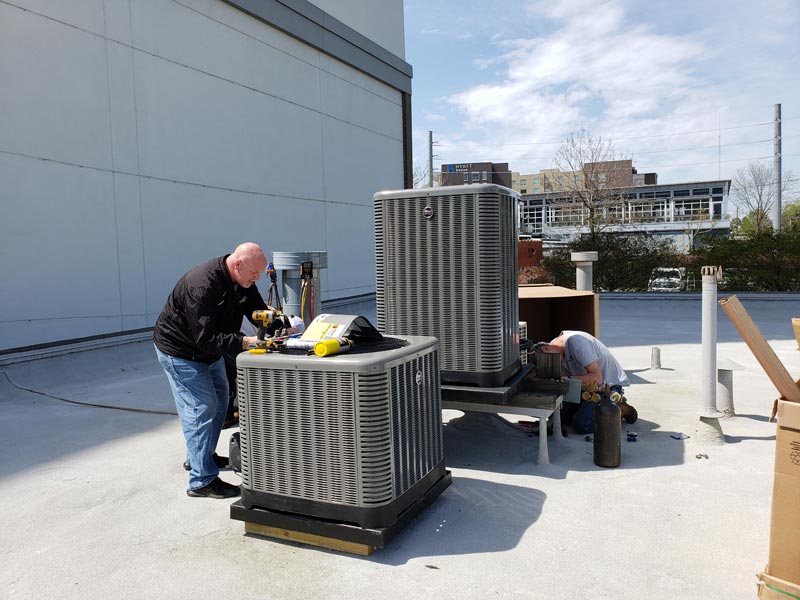
Questions to Ask Before Signing an HVAC Maintenance Contract
Before committing to a commercial maintenance agreement, these questions should have clear, documented answers:
- What specific services are included in each scheduled visit, and which components are covered?
- How are additional repairs handled when issues are found during an inspection, and what are the labor and parts rates?
- What certifications do the technicians who will service this facility hold, and how is ongoing training handled?
- What is the guaranteed response time for emergency service, and what constitutes an emergency under the agreement?
- What warranties apply to parts and labor performed under the contract?
- What are the contract duration, renewal terms, and cancellation provisions?
A provider that answers these questions clearly and in writing before the contract is signed is a provider operating with the transparency that commercial clients deserve.
Building a Reliable Commercial HVAC Program in Atlanta, GA
The right maintenance plan is a long-term operational decision, not a commodity purchase. Atlanta’s commercial facilities deserve a provider with the technical depth, service consistency, and honest business practices to back the commitment. If you are evaluating commercial HVAC maintenance options, contact us today and let us walk you through what a properly structured plan looks like for your facility.